On March 27, the Institute for International and Area Studies at Tsinghua University (hereinafter referred to as the “Institute”) hosted the inaugural session of the Tsinghua Area Studies Lecture Series, titled “Area Studies and the Construction of China’s Autonomous Knowledge System.” The lecture was delivered by Professor Jiang Jingkui, Dean of the Institute. Professor Meng Tianguang, Party Secretary of the School of Social Sciences at Tsinghua University, and Professor Yin Zhiguang from the School of International Relations and Public Affairs at Fudan University participated as discussants. As the opening event of the lecture series, the lecture addressed key issues including the disciplinary positioning of area studies, knowledge production, and the development of an autonomous knowledge system. The event was attended by Professor Yang Yongheng, Director of the Office of Liberal Arts Development at Tsinghua University, and Professor He Jianyu, Party Secretary of the School of Marxism, among others. More than one hundred participants from both within and outside the university filled the venue to capacity. The event was moderated by Dr. Wang Tao, Assistant Professor at the Institute.
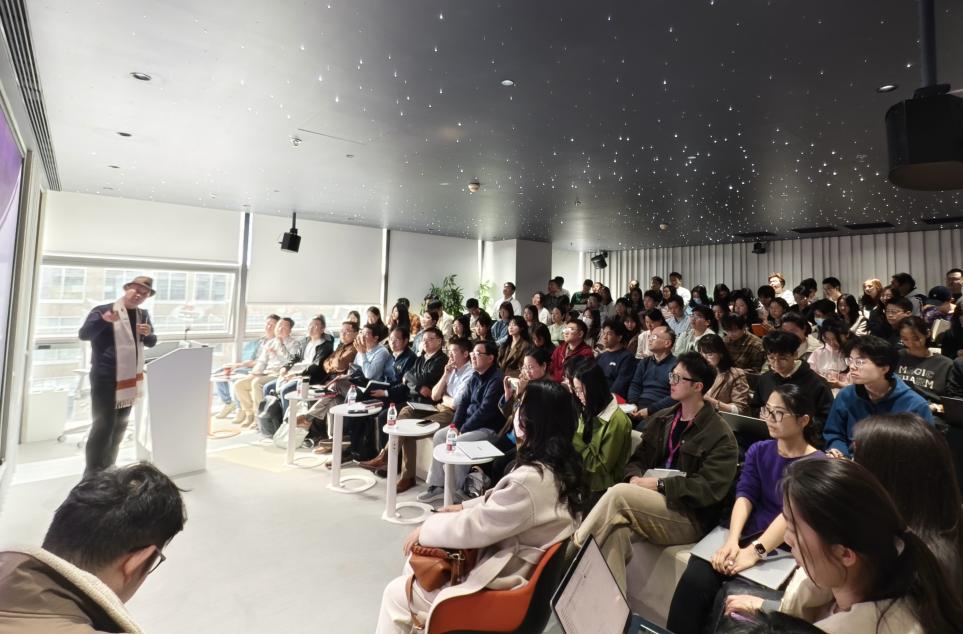
at the lecture venue
In his keynote address, Jiang Jingkui noted that area studies is a “region-based field of study” characterized by strong interdisciplinarity and comprehensiveness. In the context of profound global transformations and the accelerated restructuring of the global knowledge production system, advancing area studies is crucial not only for understanding the external world, but also for reinterpreting China in a changing global landscape and fostering knowledge production capabilities rooted in China.
Addressing the construction of China’s autonomous knowledge system, Jiang emphasized a threefold approach: a “China-based perspective, a global vision, and a counterpart-oriented viewpoint.” This entails grounding research in China’s standpoint, engaging with global issues, and developing an in-depth understanding of the historical logic, cultural structures, and contemporary concerns within the societies being studied. He argued that building such a knowledge system should neither rely on the passive acceptance of existing Western theories nor simply oppose Western-centrism. Instead, it should be based on China’s experience and global realities, forming a comprehensive knowledge system with intellectual autonomy, explanatory power, and the capacity to provide leadership. He further highlighted that a robust knowledge system forms the foundation of a discourse system, and its construction depends on sustained, systematic, and rigorous knowledge production.
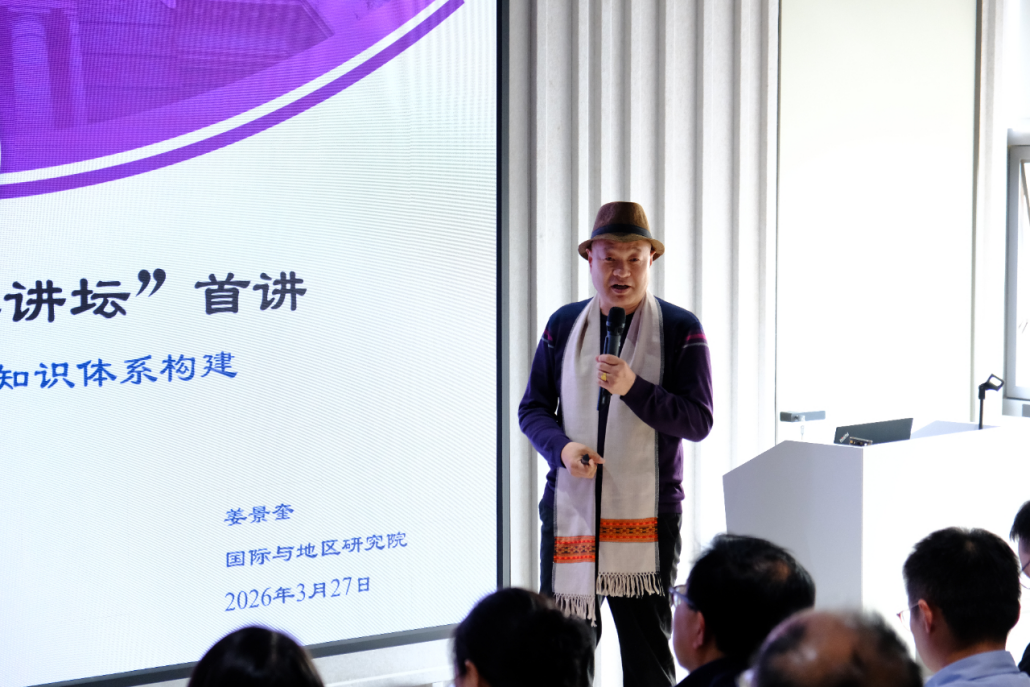
Professor Jiang Jingkai sharing insights from the lecture
At the methodological level, Jiang underscored the importance of fieldwork, language proficiency, and long-term accumulation. He pointed out that area studies is not merely the collection and compilation of external information, but requires immersion in the societies being studied to produce grounded knowledge. Meaningful research, he stressed, must be built upon long-term observation, deep understanding, and continuous accumulation. He described area studies as “a discipline found where the lights are dim,” urging scholars to move beyond surface-level trends and instead engage deeply with social structures, historical contexts, and underlying dynamics. Using the metaphor of “water and soil,” he explained that research should not remain at the level of visible phenomena, such as “lotus flowers and leaves,” but should investigate the underlying conditions that shape their growth.
During the discussion session, Meng Tianguang responded from the perspective of disciplinary development and knowledge production. He noted that the establishment of new disciplines requires not only problem awareness and academic communities, but also corresponding organizational structures and talent cultivation mechanisms. The development of area studies involves both the restructuring of knowledge production methods and the tension between regional knowledge and disciplinary standards of evaluation. Regarding the construction of an autonomous knowledge system, Meng emphasized that, unlike the natural sciences, the social sciences are inherently concerned with subjectivity. Area studies should therefore maintain a China-based standpoint while also developing forms of knowledge expression capable of engaging in meaningful dialogue with the wider world.
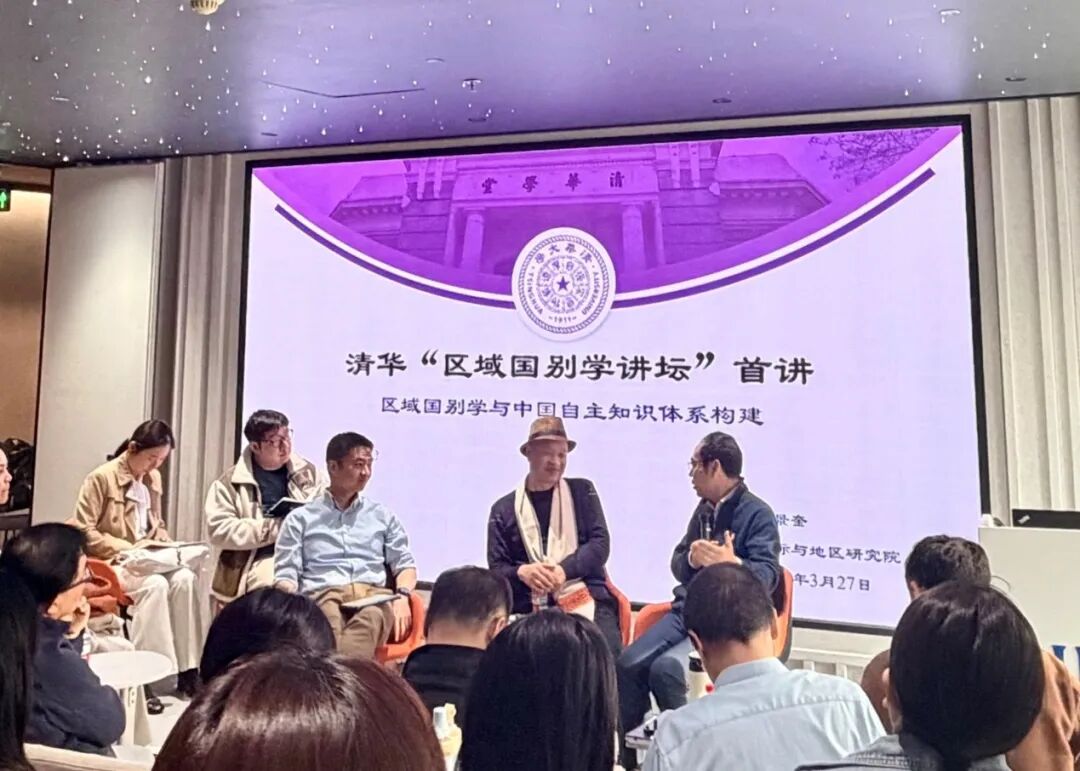
Interactive exchange during the discussion session
Drawing on his interdisciplinary research experience, Yin Zhiguang discussed issues from the perspectives of historical methodology, problem consciousness in the humanities and social sciences, and the positionality of researchers. He argued that the core of area studies lies in understanding people within their evolving historical and social contexts. Whether in constructing an autonomous knowledge system or advancing area studies, it is essential to grasp individuals’ circumstances, historical positions, and global connections. He highlighted the significance of area studies in prompting scholars to reconsider the origins of knowledge, the establishment of perspectives, and the ways in which research can respond to the complexities of the real world.
During the Q&A session, faculty and students engaged in lively discussions with the speakers on topics such as the research trajectories of early-career scholars, approaches to entering and influencing the societies under study, and methodological innovations in the age of artificial intelligence.
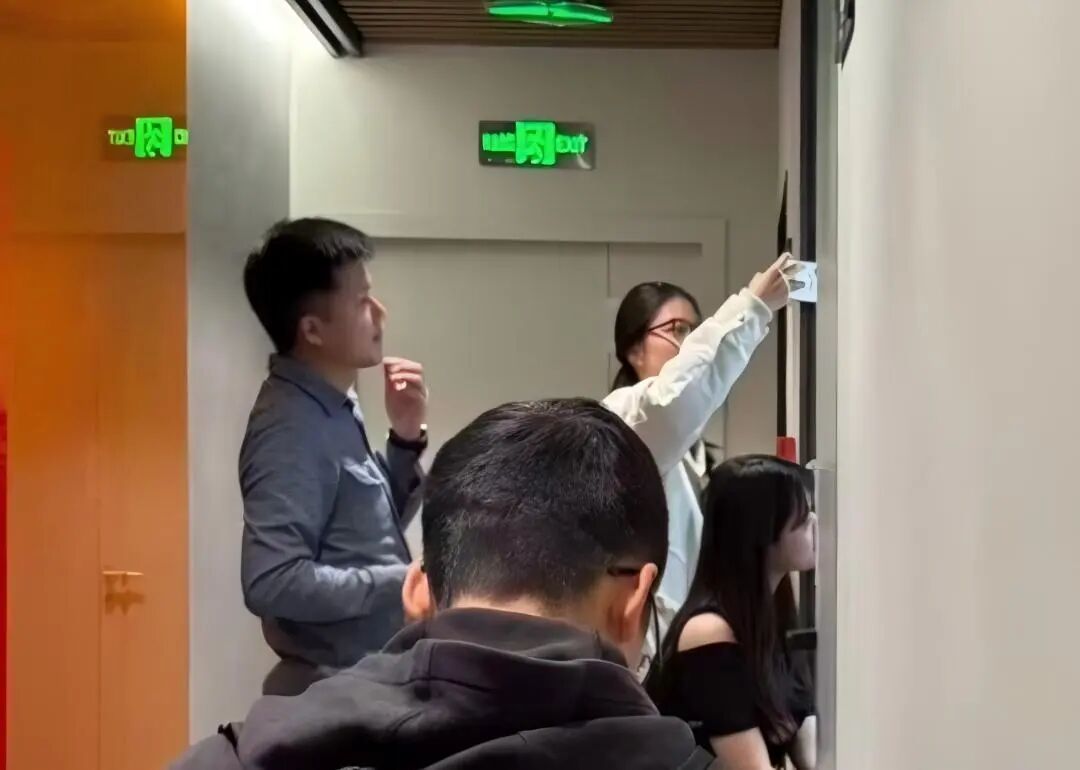
beyond the venue
To bring together leading scholars from diverse fields worldwide and to foster in-depth dialogue on frontier issues, theoretical approaches, and real-world concerns in area studies, the Institute for International and Area Studies at Tsinghua University launched the Tsinghua Area Studies Lecture Series in March 2026. The initiative aims to stimulate new insights through the convergence of diverse perspectives, expand the intellectual boundaries of area studies, and contribute to the development of China’s autonomous knowledge system, as well as to enhance the country’s capacity for international communication and global issue interpretation.