On the morning of April 17, 2026, the second session of the Tsinghua Area Studies Lecture Series, jointly hosted by the Institute for International and Area Studies (IIAS) at Tsinghua University and the India Studies Center of the Department of Foreign Languages and Literatures, was successfully held in Room 116 of Wennan Building. The event also formed the third session of the South Asia Lecture Series. Professor Cairang Tai from the School of Chinese Ethnic Minority Languages and Literatures at Minzu University of China delivered a lecture entitled “Mount Gangdise and Tibetan Civilisation: Faith, Ritual, and Cultural Identity.” Professor Jiang Jingkui, Dean of IIAS and Director of the India Studies Center, served as discussant, and the lecture was chaired by Associate Professor Jia Yan, Executive Director of the India Studies Center.
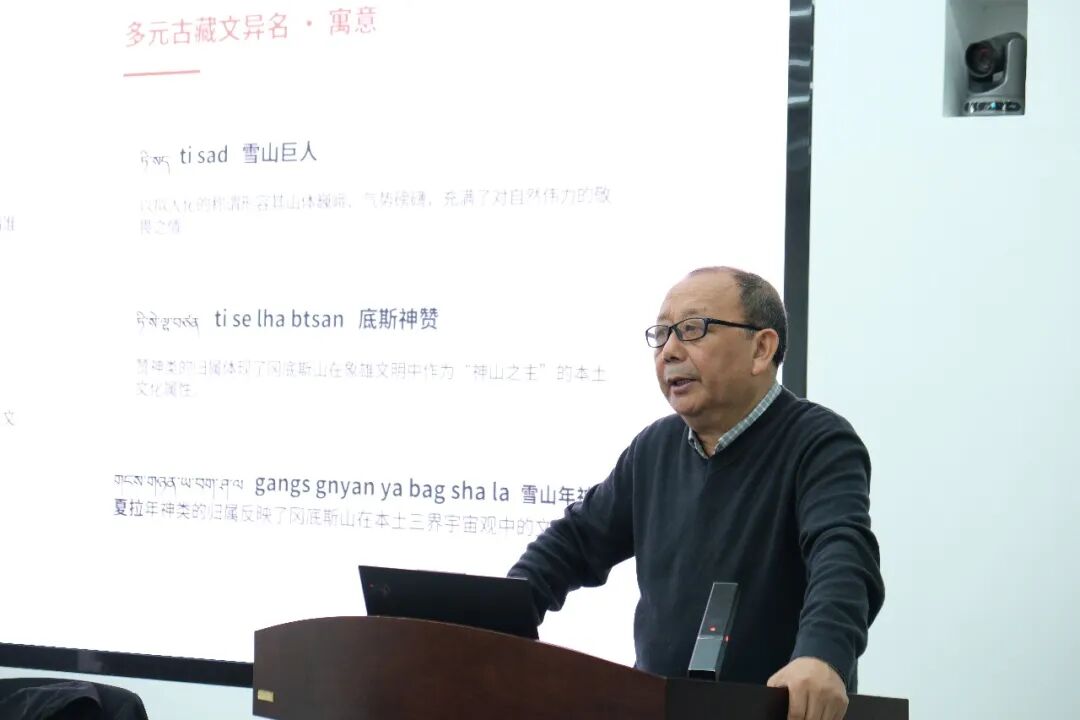 Professor Cairang Tai delivering the lecture
Taking representations of Mount Gangdise in Bon religious texts as a point of departure, Professor Cairang Tai systematically examined the multiple names, ritual meanings, and divine narratives associated with Mount Kailash (known as “Gangdise”) in the history of the Bon tradition. Building on this foundation, he elaborated on the significance of Mount Gangdise in Tibetan religious culture from two perspectives: its relationship with the Zhang Zhung civilisation and with Buddhist civilisation.
With regard to its connection to the Zhang Zhung civilisation, Professor Cairang Tai noted that Mount Gangdise is regarded as the prototype of the “Nine-tiered Yungdrung Tower” in Bon. He suggested that Bon followers may have drawn on Central Asian geographical concepts to reconstruct it conceptually as a sacred realm corresponding to the Buddhist “Western Pure Land,” thereby forming a distinctive vision of paradise. In addition, Mount Gangdise was the cultural heartland of Zhang Zhung, regarded not only as an important cradle of its civilisation but also as the spiritual centre of Yungdrung Bon. Notably, within the Bon belief system, Shiva is referred to as the “King of the Southern Yungdrung,” a phenomenon that provides important clues for understanding the relationship between Bon and Hinduism.
In discussing the relationship between Mount Gangdise and Buddhist civilisation, Professor Cairang Tai argued that following the introduction of Buddhism to the Qinghai–Tibet Plateau, a long and complex process of interaction unfolded between Buddhism and Bon, involving stages of competition, adaptation, and integration. From the legendary contest between Milarepa and Naro Bonchung over Mount Kailash to the incorporation and reinterpretation of pilgrimage rituals, Mount Gangdise was gradually integrated into the Tibetan Buddhist religious system.
Professor Cairang Tai concluded that the cross-cultural and multi-ethnic characteristics embodied in Mount Gangdise are deeply rooted in the ancient traditions of Zhang Zhung belief. Centred on symbolic elements such as sacred mountains, holy lakes, and the sources of great rivers, Mount Gangdise brings together the historical memory and cultural identity of the Tibetan people, while also reflecting the diversity and inclusiveness of the Chinese nation.
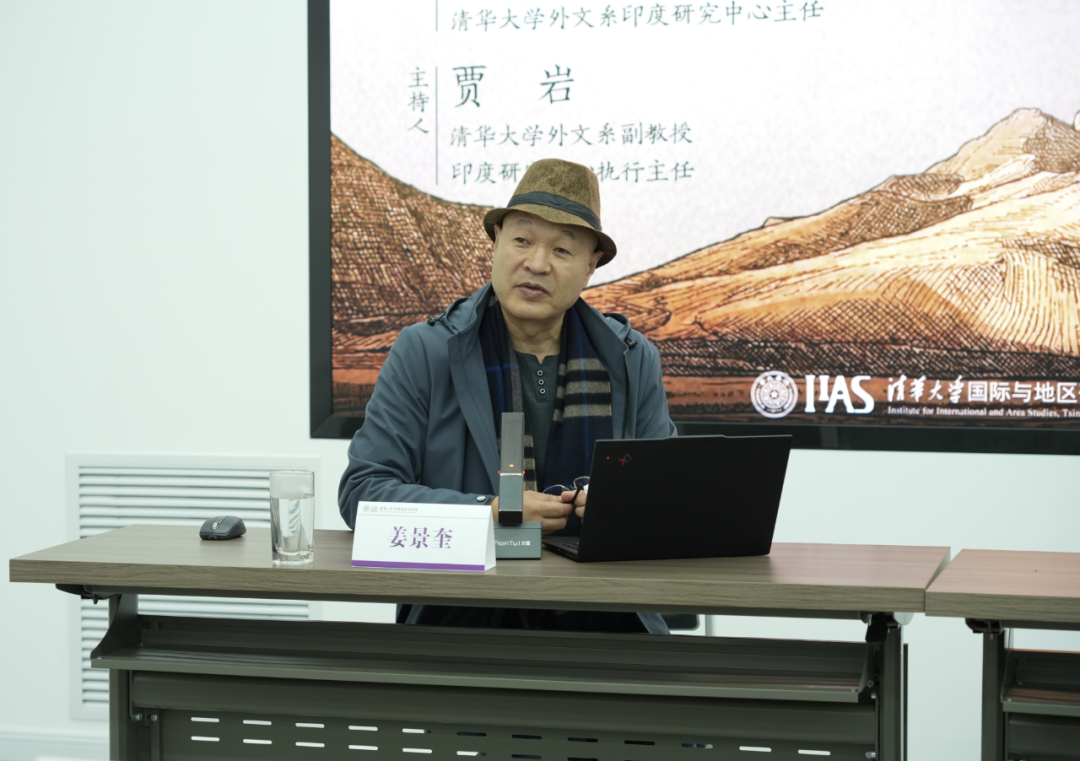 Professor Jiang Jingkui as discussant
In his comments, Professor Jiang Jingkui spoke highly of Professor Cairang Tai’s research on Mount Kailash, noting that it significantly expands scholarly understanding of its cultural significance. He further elaborated on several key issues. First, from the perspective of religious structure, Tibetan Buddhism may be understood as “Bon at its core and Buddhism in its outward form,” within which Mount Kailash culture plays a foundational role. Second, in terms of cultural origins, the study of Mount Kailash should be grounded in the Gangdise region itself, while maintaining a critical approach to certain accounts found in external sources. Third, regarding the relationship between Mount Kailash culture and Hinduism—particularly the origins of the figure of Shiva—there remains considerable scope for further scholarly inquiry. Fourth, from the perspective of intellectual history, certain Western-centric interpretative frameworks in Tibetan studies, such as theories of a unified Indo-Tibetan Buddhism, warrant careful re-examination. Overall, he emphasised that Mount Kailash culture serves as an important key to understanding interactions among civilisations and merits sustained scholarly attention.
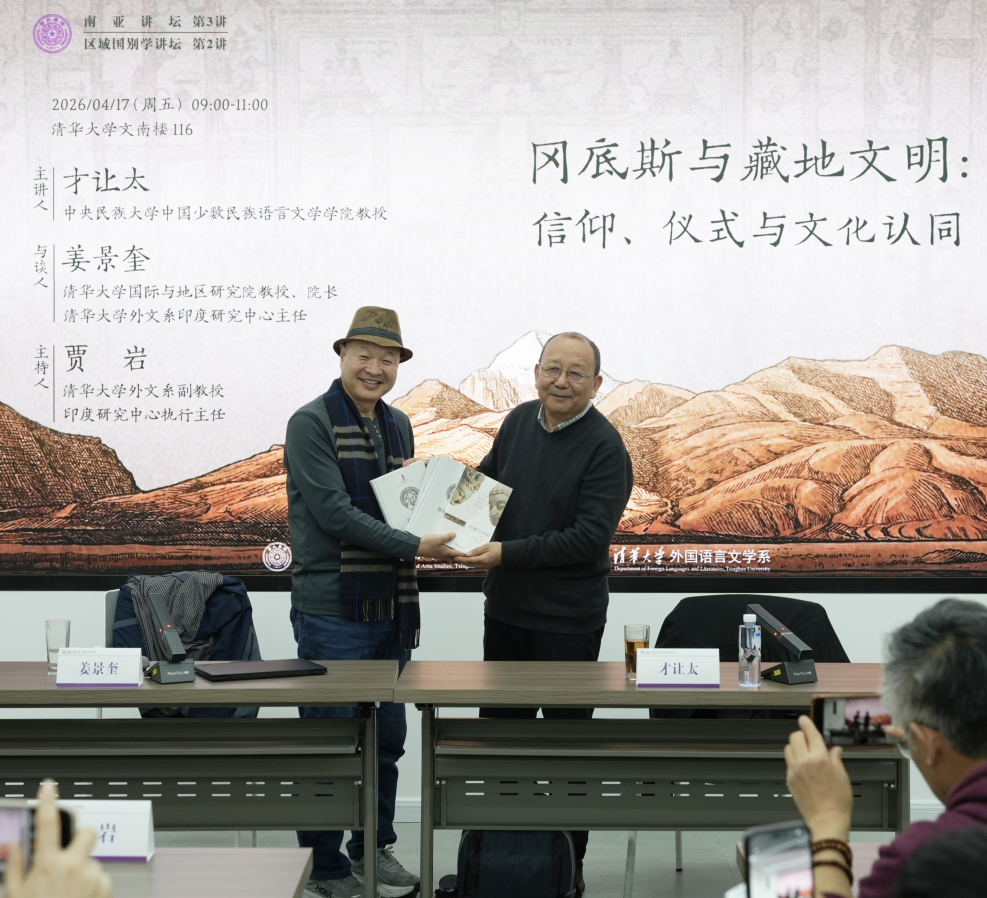 Book presentation
At the conclusion of the lecture, Professor Jiang Jingkui presented Professor Cairang Tai with several works he has led in translating, including The Ocean of Subhashitas and India and China. The event concluded with an engaging and thought-provoking academic discussion.
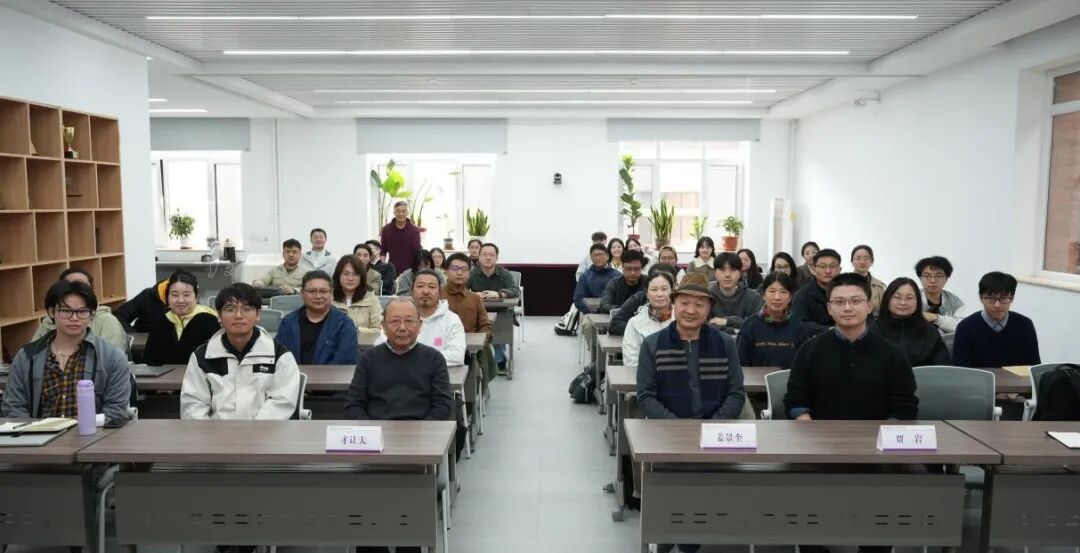 Group photo