On April 24, IIAS held the second session of the Tsinghua Area Studies Academic Salon. The event, titled “Party Rhetorical Capacity: A Research Agenda for African Politics,” featured Dr Xiao Qijia, Assistant Professor at IIAS, as keynote speaker, and was moderated by Dr Yuan Mengqi, Assistant Professor. Dozens of faculty members and students from both within and outside the University participated in the discussion.
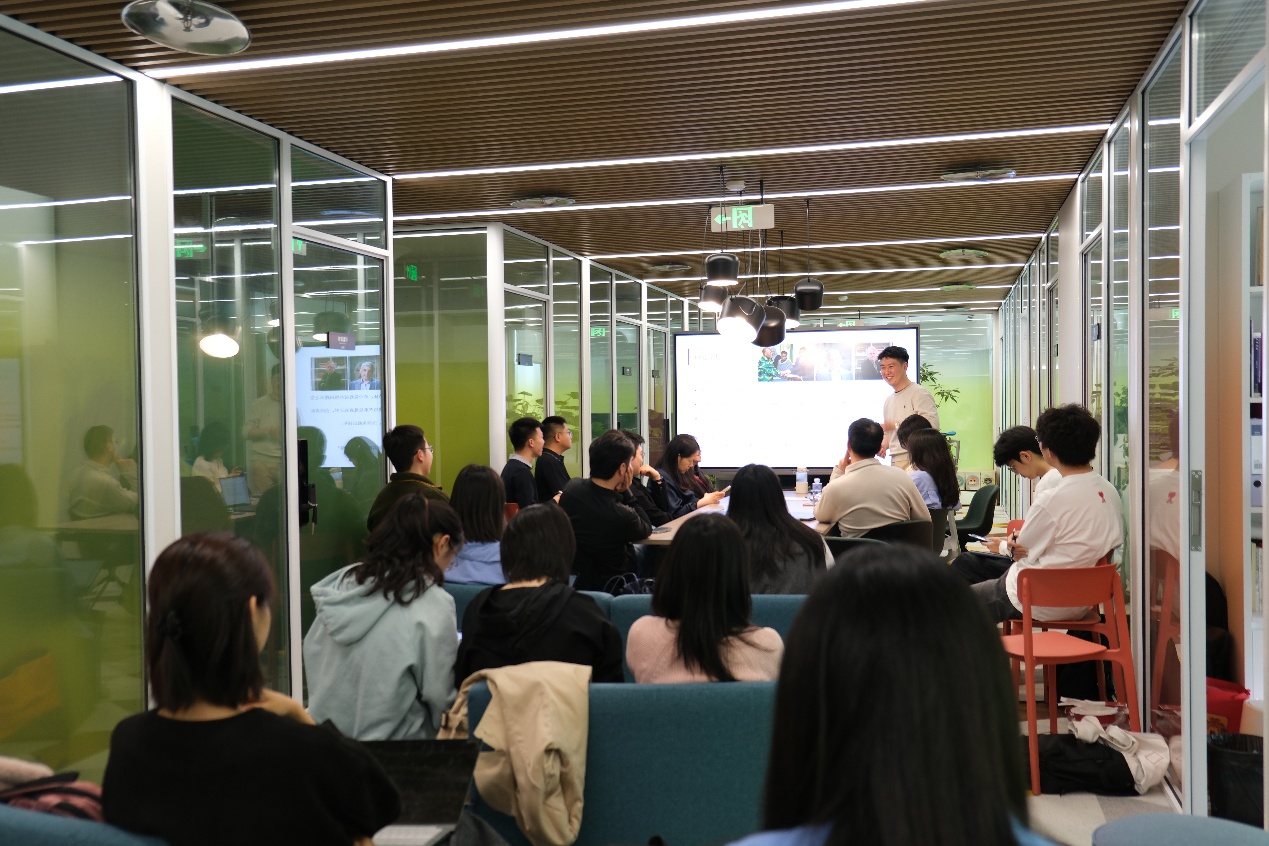
Scene from the salon
Using Tanzania's 2020 presidential election as a case study, Xiao Qijia examined how the ruling Chama Cha Mapinduzi (CCM) effectively deployed party rhetorical capacity in response to the governance crisis brought about by the COVID-19 pandemic, ultimately securing regime continuity with a record-high electoral victory. In general terms, party capacity refers to a political party's ability to control key political functions through various institutional resources. Existing scholarship has primarily focused on organisational, coercive, and patronage capacities, but such frameworks are insufficient to fully explain the persistence of the CCM regime. The concept of party rhetorical capacity, Xiao argued, provides an important supplementary analytical lens.
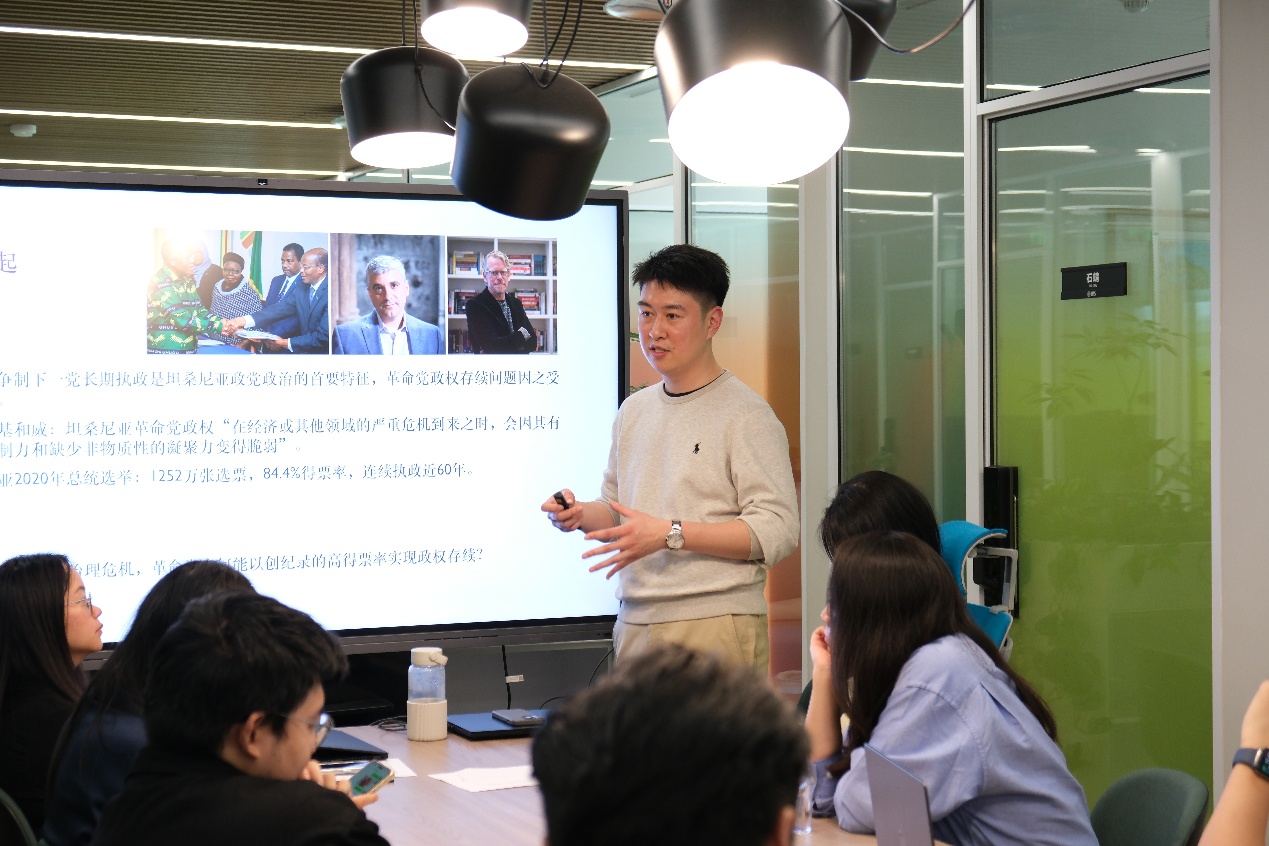
Xiao Qijia delivering the presentation
Party rhetorical capacity refers to a party's ability to construct political discourse in competitive contexts and, when necessary, employ suppressive means to achieve persuasive political goals. This capacity operates through two principal logics: suppression and persuasion.
The suppressive logic refers to non-violent strategies used by political parties to weaken competing sources of authority—particularly where political authority and expert authority are divided or in competition—thereby strengthening the party's rhetorical advantage and enhancing its capacity to persuade voters.
The persuasive logic includes both direct and indirect pathways. Direct persuasion influences voters' perceptions and behaviour through political rhetoric itself, while indirect persuasion operates by shaping policy orientation and socio-economic systems through governance performance, thereby generating broader political support. Xiao's research suggests that indirect persuasion, which works through structural influence on governance and society, often has a more profound long-term impact than direct rhetorical projection alone.
During the discussion session, Xiao Qijia reflected on his extensive fieldwork experience across multiple African countries and shared broader thoughts on area studies research. He noted that IIAS has long emphasised interdisciplinary training, language proficiency, and fieldwork methodology, creating greater possibilities for the theoretical development of area studies. He further argued that the conceptualisation of party rhetorical capacity demonstrates the enduring value of rigorous, hands-on scholarship, even in the age of artificial intelligence.
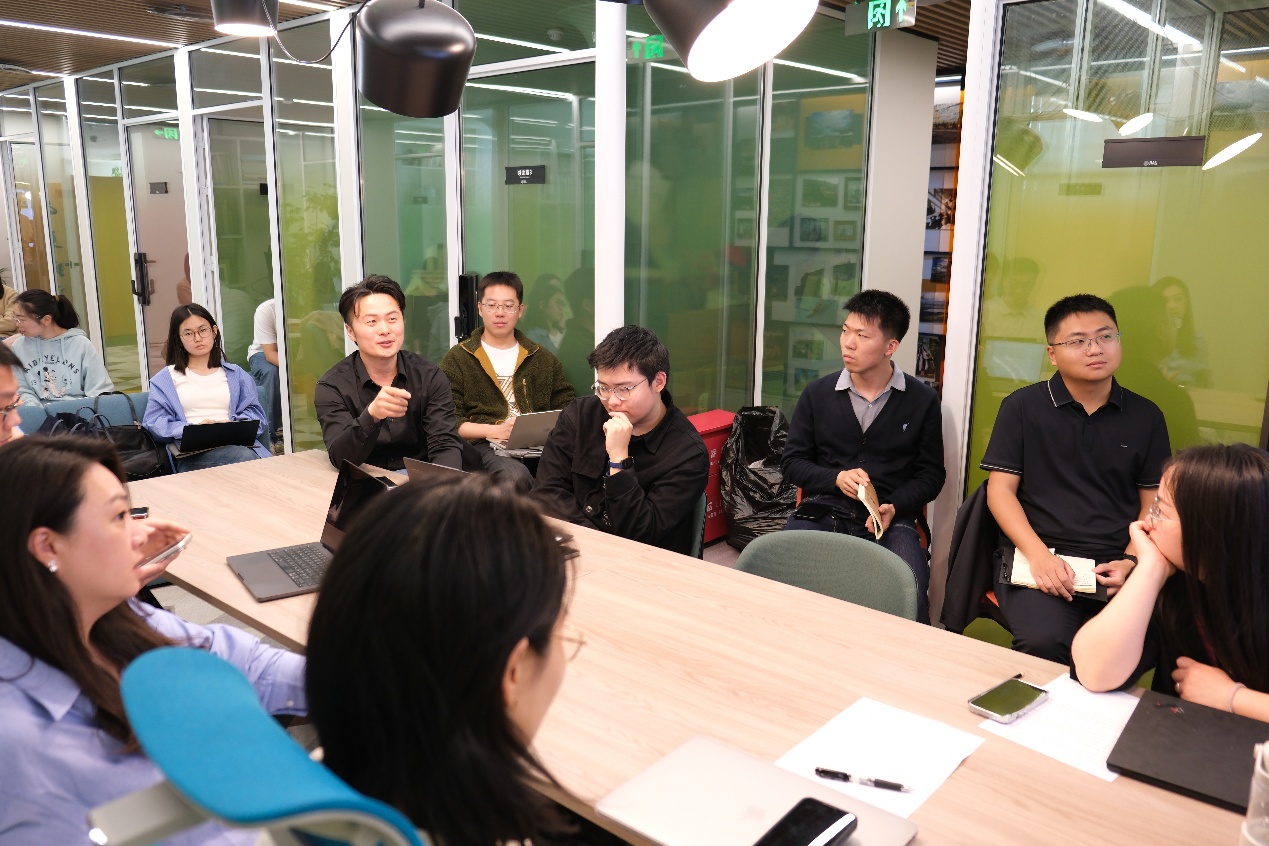
Discussion with faculty and students
In her concluding remarks, Yuan Mengqi noted that the salon demonstrated the distinctive value of integrating a China-based perspective, a global outlook, and the viewpoints of the societies under study within area studies research. She emphasised that scholarly dialogue and mutual intellectual engagement provide enduring momentum for the development of the area studies academic community.
The Tsinghua Area Studies Academic Salon will continue to be held regularly, bringing together emerging scholars for interdisciplinary dialogue on frontier issues and contributing to the development of an independent Chinese knowledge system in area studies.