On May 15, 2026, Professor Ole Wæver of the Department of Political Science at the University of Copenhagen and founding director of the Centre for Advanced Security Theory, together with Professor Charlotte Epstein, Visiting Professor at Tokyo College of the Institute for Advanced Studies on Asia at the University of Tokyo, visited IIAS for academic exchange activities. The visit deepened faculty members' and students' understanding of the intersections among postcolonial thought, international relations theory, and area studies, while also creating new opportunities for IIAS to strengthen collaboration with leading international academic institutions. He Xuebing, Associate Dean of IIAS, together with dozens of faculty members and students from within and outside the University, participated in the event.
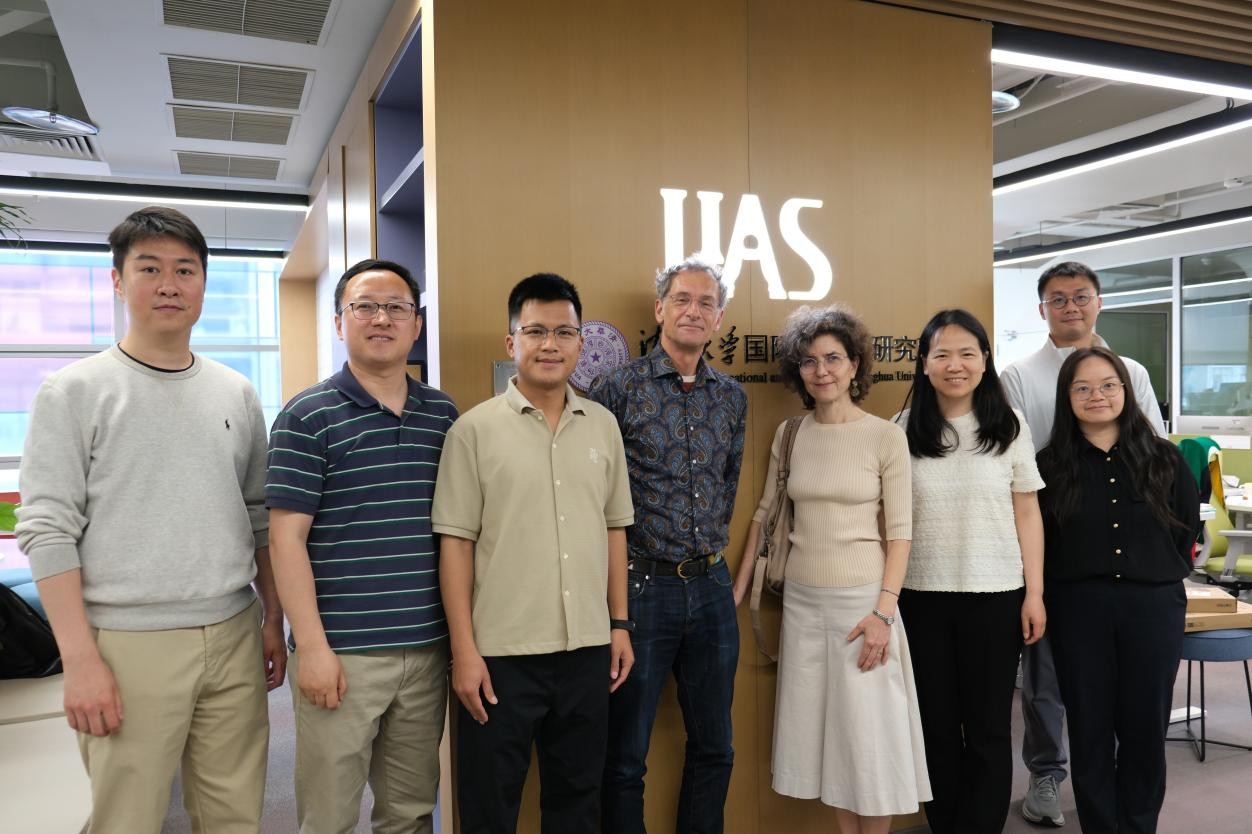
Group photo of participants
During the visit, Professor Epstein delivered a lecture entitled "From Aimé Césaire to Frantz Fanon: Toward an Anti-Colonial Universalism in French Postcolonial Thought." Tracing the intellectual history of French postcolonial thought, the lecture focused on two major Martinican thinkers—Aimé Césaire and Frantz Fanon—and explored how they, through different intellectual trajectories, reflected critically on the supposedly universal civilisational narratives of European colonial modernity while seeking to construct a genuinely decolonial vision of universalism. The event was moderated by Dr Yuan Mengqi, Assistant Professor at IIAS.
Professor Epstein began by discussing the intellectual tradition of Négritude advocated by Césaire. She explained that Césaire sought to reconstruct the subjectivity of the colonised through Black history, culture, embodiment, and colonial experience. By speaking from within the lived experience of Blackness, Césaire further revealed how colonialism was deeply embedded in modern France, modern Europe, and their broader civilisational narratives. His work therefore ultimately pointed towards a "postcolonial Frenchness," in which France could no longer understand itself as a purely abstract, white-centred republic, but instead had to recognise colonial history, Black experience, and overseas colonial subjects as integral components of French modernity.
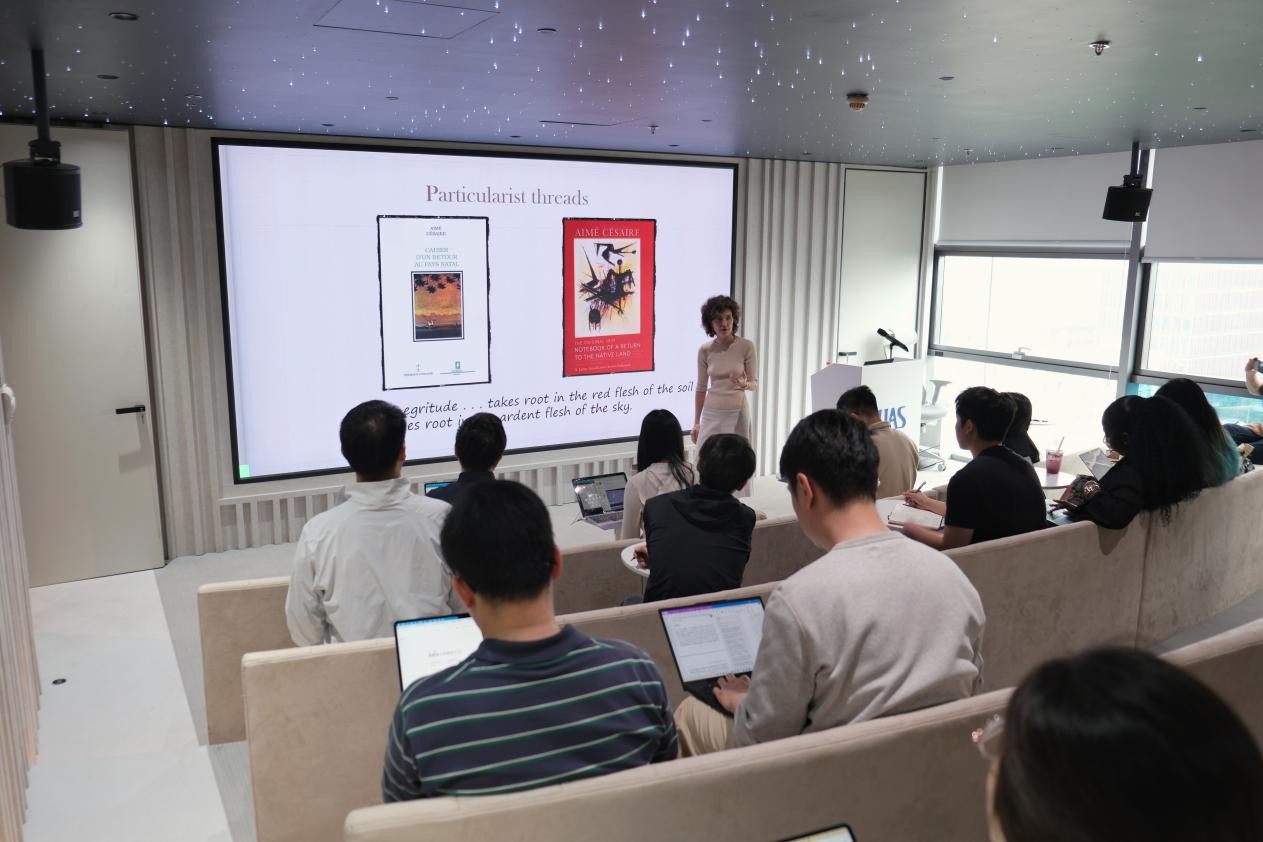
Lecture in progress
Fanon's approach, by contrast, was more radical and diagnostically oriented. Drawing on his experience as a psychiatrist, Fanon's Black Skin, White Masks (1952) used a first-person analytical perspective to expose the profound psychological distortions produced by colonialism. According to Fanon, the power relationship between coloniser and colonised constituted a systematic mechanism of self-alienation, forcing the colonised to perceive themselves through the gaze of the coloniser and trapping them in a fractured process of self-identification. Fanon's experiences working in Algeria further reinforced this understanding. In his 1956 resignation letter to Robert Lacoste, the French Minister Resident in Algeria, Fanon argued that Arabs had long existed in a condition of alienation within their own country and endured absolute dehumanisation. The colonial social structure itself, he maintained, was hostile to the restoration of individual subjectivity and therefore represented a social order that could not be sustained and had to be replaced. The lecture concluded by emphasising that Fanon's anti-colonial thought ultimately pointed towards a new form of universalism centred on human freedom, dignity, and liberation.
At the end of the lecture, students from Peking University, Beijing Foreign Studies University, the University of Chinese Academy of Social Sciences, and the School of Marxism at Tsinghua University engaged Professor Epstein in discussion on topics including the relationship between Négritude and anti-Black racism, the theoretical boundaries of anti-colonial universalism, and whether the shared experiences of figures such as Salvador Allende, Lu Xun, and Fanon—each of whom transitioned from medical training to literary or intellectual pursuits—shaped a common concern with diagnosing social pathology.