On May 18, IIAS held the third session of the Tsinghua Area Studies Academic Salon. The event, titled "Global Political-Economic Transformations and Industrial Development in Southeast Asia," was delivered by Qin Beichen, a doctoral student at IIAS, and moderated by Dr Wang Tao, Assistant Professor. More than a dozen faculty members and students from within and outside the University participated in the discussion.
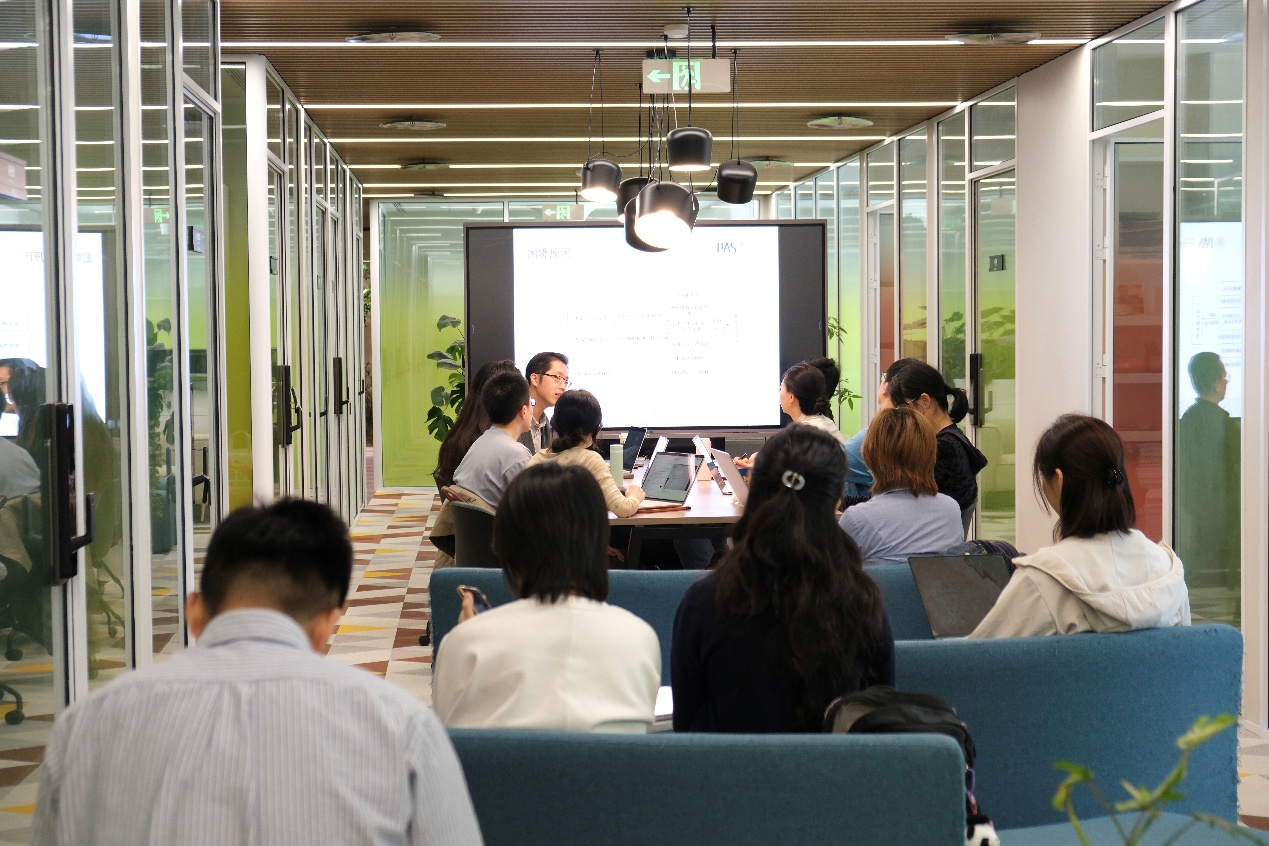
Scene from the salon
Using Vietnam's industrial development as a point of departure, Qin Beichen examined the challenges of industrial upgrading facing contemporary Southeast Asian countries and their roots in the international political economy. Compared with the "Four Asian Tigers," which became integrated into global production networks at an earlier stage, Vietnam's manufacturing development has relied more heavily on expansion in scale than on technological advancement. As a result, it is more likely to remain concentrated in lower value-added segments of production and to face even greater obstacles to industrial upgrading. Given that Vietnam's manufacturing sector has not encountered significantly greater domestic constraints than those faced by the Four Asian Tigers, Qin argued that the primary causes of its intensified upgrading challenges lie in the international political-economic environment. Since the beginning of the twenty-first century, changes in production paradigms have substantially reduced opportunities for technological upgrading at the firm level, while shrinking policy space has made government support increasingly difficult. Together, these factors have left Vietnam more vulnerable to becoming locked into labour-intensive production activities dominated by foreign investment. He suggested that the prospects for economic catch-up among developing countries in Southeast Asia have become increasingly challenging, a trend that also implies that Chinese manufacturing is likely to retain significant competitiveness amid the ongoing restructuring of global production networks.
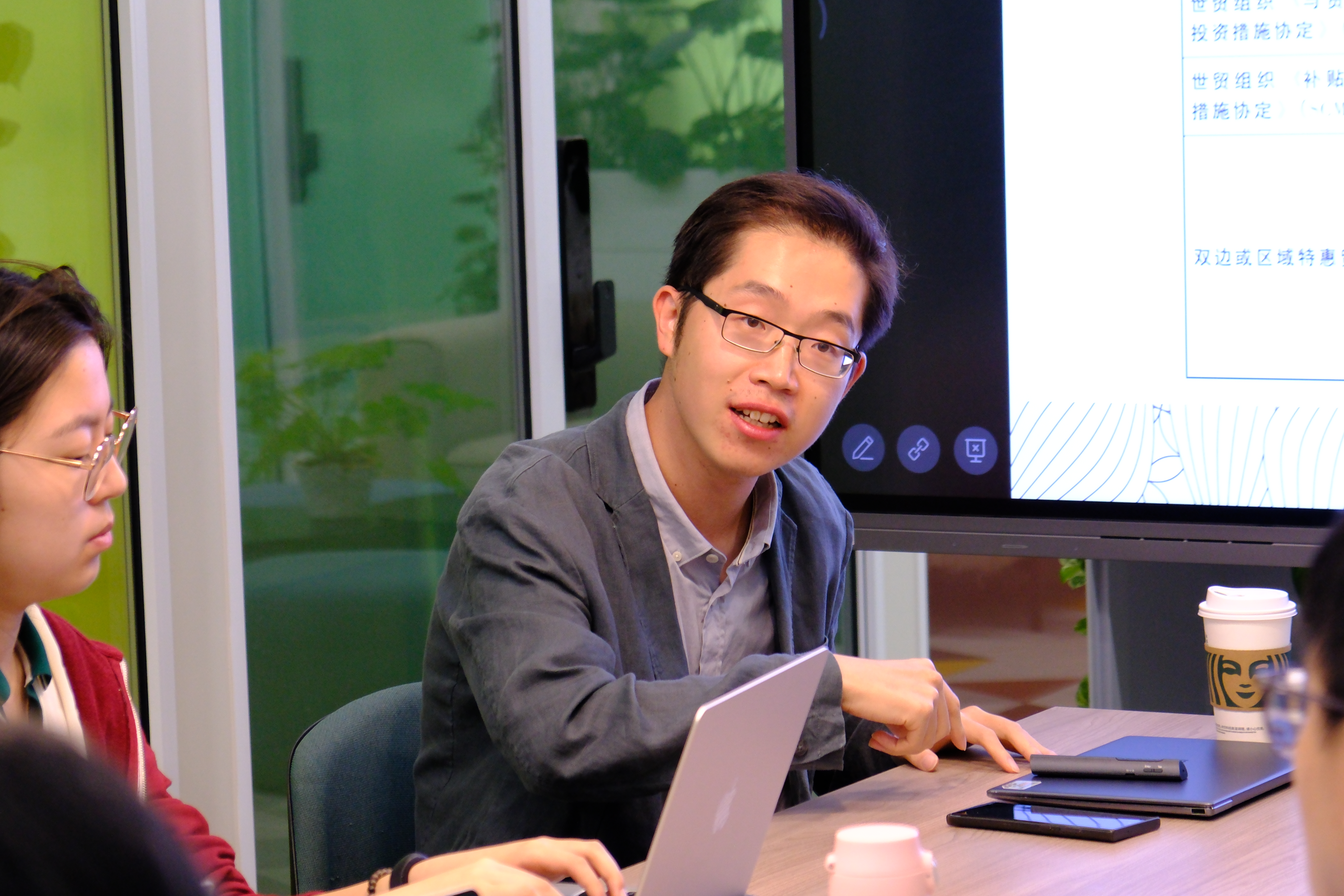
Qin Beichen delivering the presentation
Qin then turned to the impact of global geopolitical and economic transformations on industrial development in Southeast Asia since 2018. He argued that recent efforts by the United States to promote the "de-sinicization" of manufacturing production have indeed contributed to a degree of decoupling in direct China–U.S. trade while accelerating the relocation of some Chinese manufacturing activities to Southeast Asia. To date, however, such industrial relocation has remained concentrated in selected countries and specific sectors, largely confined to lower value-added stages of production. Many relocated activities also continue to depend heavily on China. Even amid growing decoupling pressures and threats of "reciprocal tariffs" under the Trump administration, Qin contended that the emergence of a complete production network in Southeast Asia independent of China remains highly unlikely. This assessment, he argued, stems from four factors: the internal contradictions of U.S. containment policies, China's existing advantages in markets and production, structural constraints within Southeast Asian countries, and broader shifts in technological and economic paradigms. For China, while it is important to guard against the short-term macroeconomic effects of industrial relocation to Southeast Asia, greater attention should be paid to its potential implications for domestic technological upgrading. China should seek to transform passive industrial relocation into proactive economic cooperation, ensuring that both China and Southeast Asia can continue to pursue shared prosperity amid an increasingly uncertain international environment.
During the discussion session, Qin responded to questions from participants on topics including comparative country studies, industrial policy, regional cooperation, and competing academic approaches. He emphasised that research on regional and country-specific economic issues requires not only macro-level analysis and quantitative data, but also a deep understanding of contextual factors, highlighting the particular value of long-term fieldwork in the countries under study.
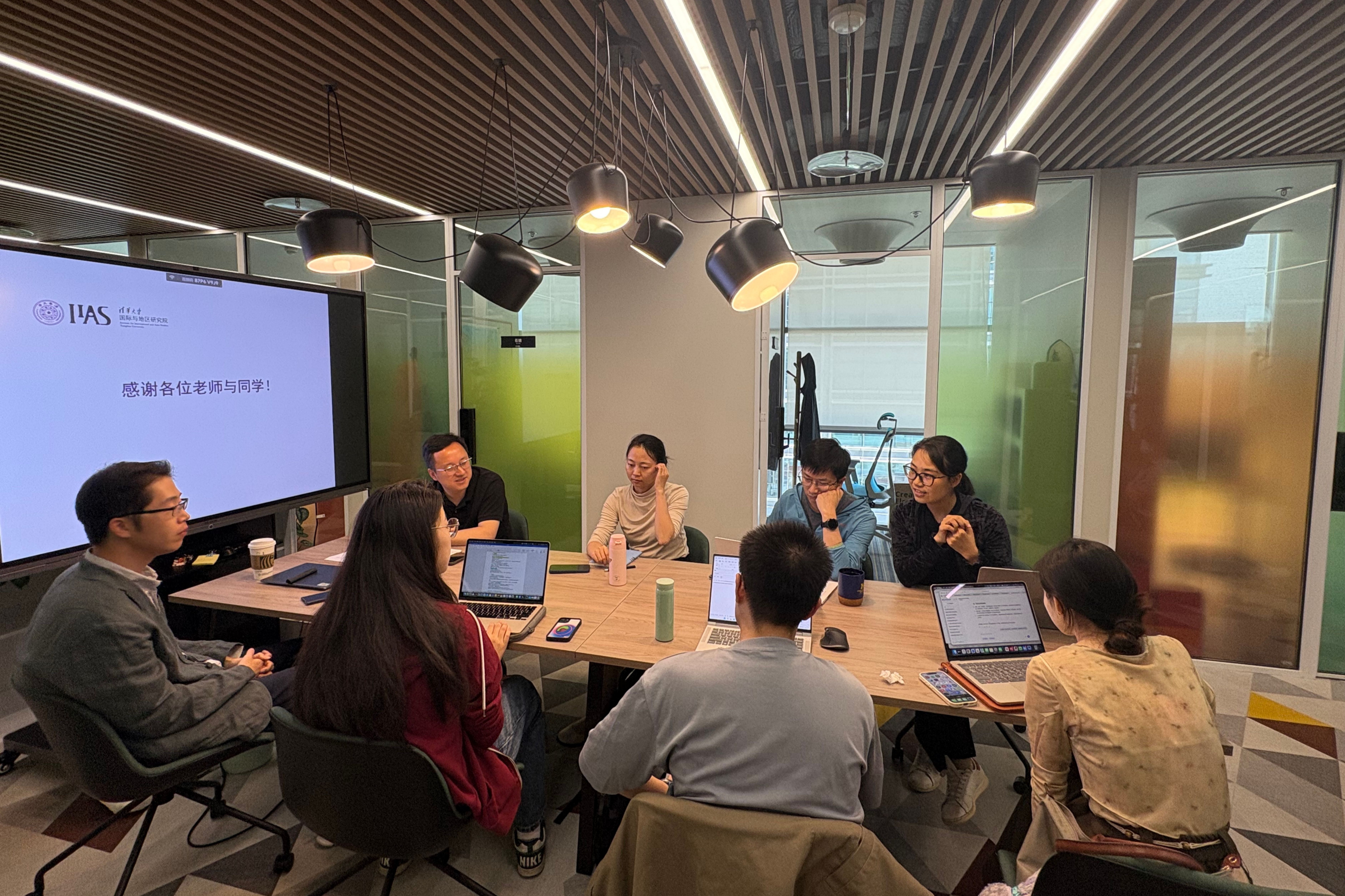
Discussion with faculty and students
In his concluding remarks, Wang Tao noted that the salon demonstrated the productive integration of economic research methods and fieldwork-based inquiry, supported by extensive empirical and field research. He expressed the hope that continued exchanges among students and scholars would provide fresh momentum for the development of the area studies academic community.
The Tsinghua Area Studies Academic Salon will continue to be held regularly, bringing together emerging scholars for interdisciplinary dialogue on frontier issues and contributing to the development of an independent Chinese knowledge system in area studies.