On the afternoon of June 22, 2026, the fourth lecture of the Tsinghua Area Studies Lecture Series and the fourth South Asia Lecture Series were jointly organised by IIAS at Tsinghua University and the Centre for Indian Studies of the Department of Foreign Languages and Literatures. The lecture was held in Room 216, Wennan Building. Associate Professor Rakesh Kumar, Director of the Centre for Chinese Studies at the School of Language, Literature and Culture Studies, Jawaharlal Nehru University, delivered a lecture entitled “India–China Cultural Connections: Past and Present.” Professor Jiang Jingkui, Dean of IIAS and Director of the Centre for Indian Studies, served as discussant, while Associate Professor Jia Yan, Executive Director of the Centre for Indian Studies, moderated the event.
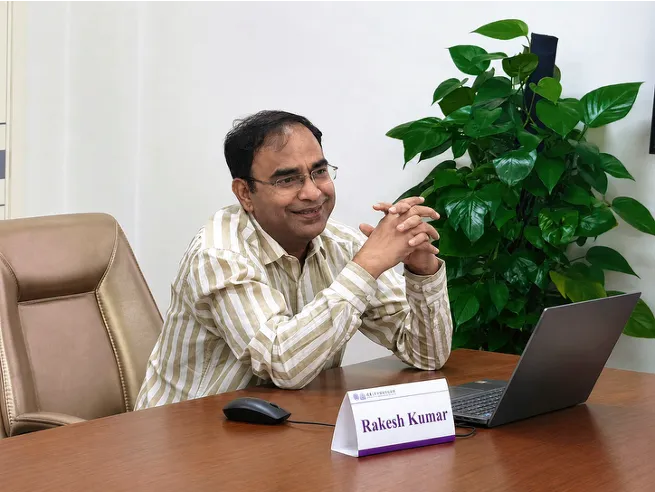
Associate Professor Rakesh Kumar delivering the lecture
Drawing on the perspectives of civilisational history and cross-cultural interaction, Rakesh Kumar traced the historical connections between the Chinese and Indian civilisations. He noted that many of the world's earliest major civilisations emerged along great river systems, and that the civilisations of China, South Asia, and Southeast Asia were all closely linked to the Himalayan river networks and their extensions. Throughout history, the development of civilisations has been accompanied by contact, exchange, and mutual influence, and the cultural relationship between China and India has consequently evolved into a multi-layered and multidirectional pattern of interaction.
Rakesh Kumar then examined the important roles played by Buddhism and the Silk Roads in facilitating exchanges and mutual learning between the Chinese and Indian civilisations in antiquity. He also compared the two civilisations from the perspectives of social customs and cultural psychology, arguing that they share many similar social traditions and festival customs, as well as a common emphasis on family, respect for elders, teachers, and nature, reflecting closely related ethical values and moral outlooks. Entering the modern era, both China and India were profoundly affected by Western imperialism and colonialism: India became a British colony, while China was reduced to a semi-colonial and semi-feudal society. As a result, the economic structures, knowledge systems, and capacities for self-expression that had characterised both civilisations were seriously disrupted and suppressed. Against this historical backdrop, the peoples of China and India also developed bonds of mutual support through their shared struggles against colonialism and imperialism. Looking to the present and the future, Rakesh Kumar argued that as both countries continue to rediscover their own civilisational traditions, the global centre of knowledge production is gradually shifting from a Western-centred to a more Asia-centred orientation, giving renewed contemporary significance to cultural connections between China and India.
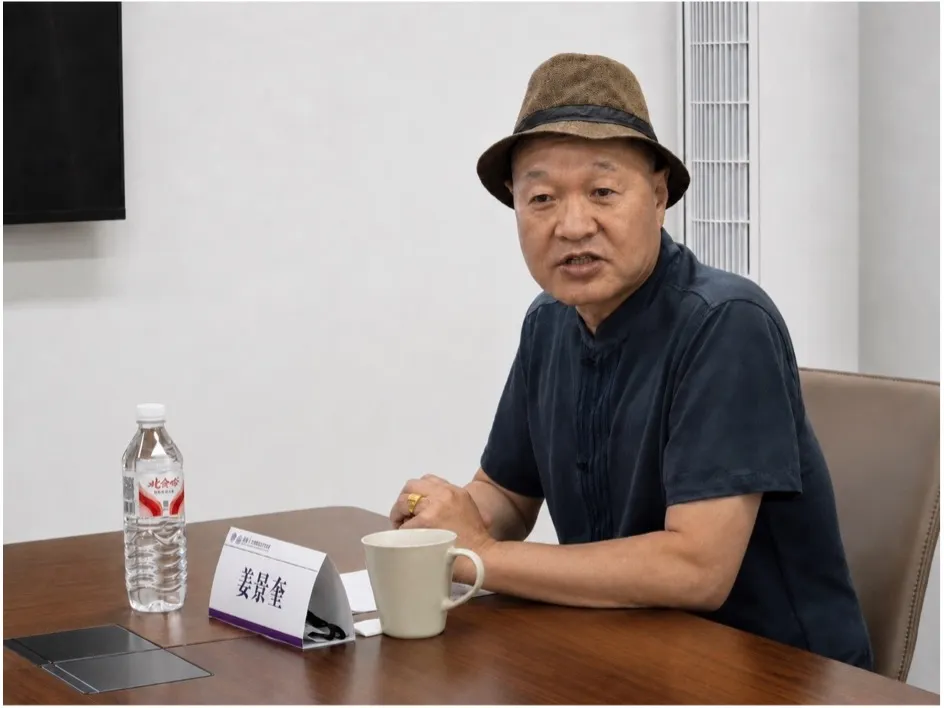
Professor Jiang Jingkui serving as discussant
In his remarks, Jiang Jingkui expressed strong support for Rakesh Kumar's arguments and responded from the perspectives of civilisational narratives and the subjectivity of knowledge production. He observed that, since the modern era, India and China had respectively been positioned as the "periphery of the British Empire" and the "Far East," with both civilisations portrayed within Western-centric narratives as backward, peripheral, and in need of "civilisation." The legacy of colonialism, he argued, extended beyond economic and material losses to encompass the realms of knowledge and discourse. Today, China has come to view the world from the standpoint of China rather than that of the "Far East," and India, likewise, should understand the world from its own civilisational perspective rather than through the inherited framework of the British Empire. Professor Jiang emphasised the importance of recognising the historical agency of both civilisations, reinterpreting their relationship from within their respective intellectual traditions, and fostering a new dialogue between civilisations that moves beyond externally imposed narratives.
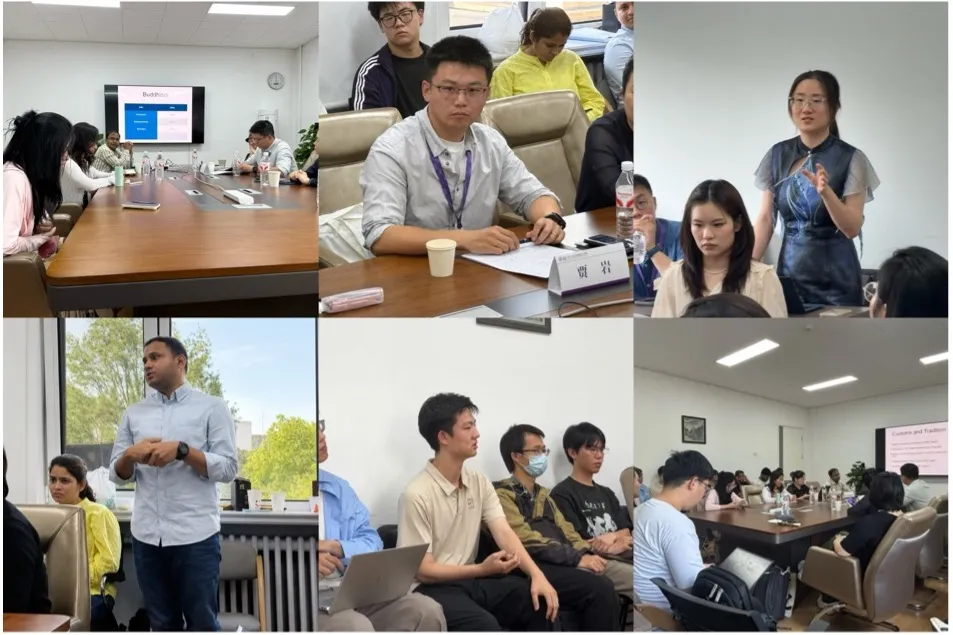
Discussion session
During the Q&A session, faculty members and students discussed topics including youth exchanges, film and media, educational cooperation, and mutual public understanding between China and India. Responding jointly to participants' questions, Jiang Jingkui and Rakesh Kumar emphasised that both countries should seek to understand one another through each other's civilisational traditions and knowledge systems. Through sustained dialogue and exchange, they argued, the two sides can deepen mutual understanding, build trust, and foster a more authentic and enduring foundation for bilateral relations.
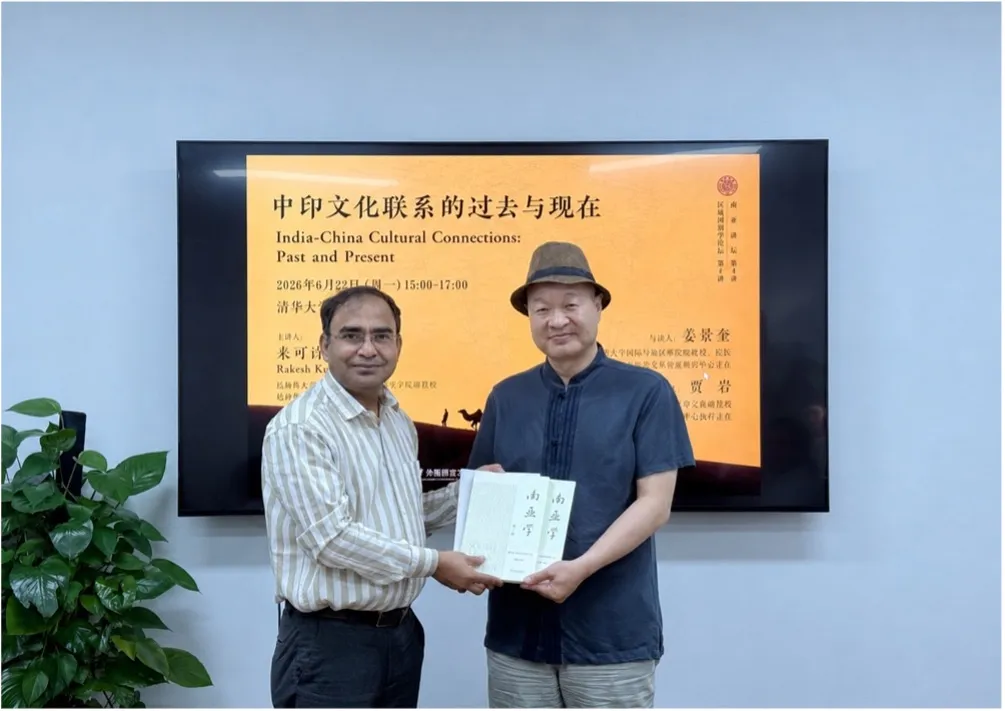
Book presentation ceremony
At the conclusion of the lecture, Professor Jiang Jingkui presented Associate Professor Rakesh Kumar with copies of South Asian Review and other publications. The event concluded successfully in a warm and engaging atmosphere.