-
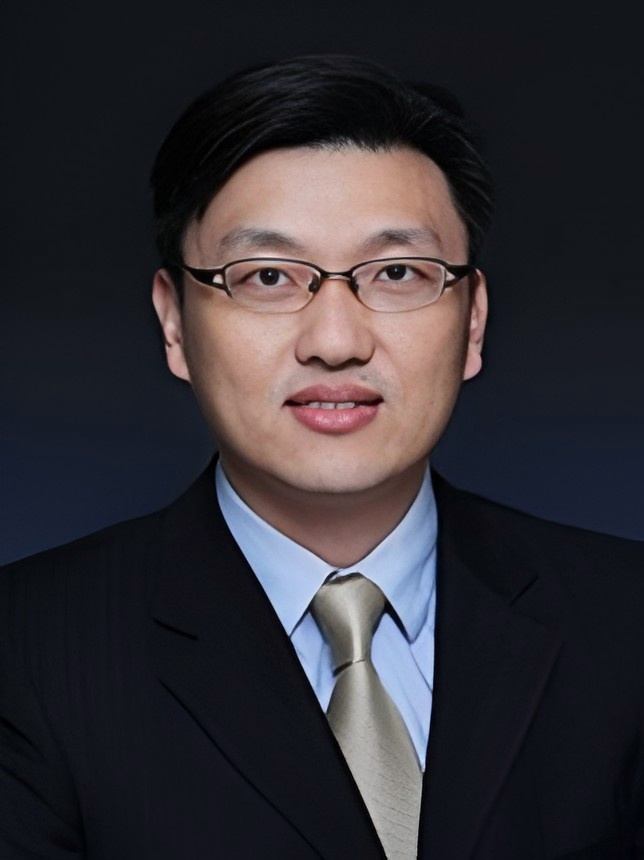
照片
 个人介绍
个人介绍长聘教授
清华大学博士
清华大学公共管理学院 院长
邮箱: zhuxufeng@tsinghua.edu.cn
电话:010-62771252
个人简历现任清华大学公共管理学院教授、院长、《公共管理评论》主编、智库研究中心主任;清华大学全球可持续发展研究院执行院长、清华大学科技发展与治理研究中心主任。朱旭峰入选国家杰出青年科学基金(2016)、国家优秀青年科学基金(2013)、国家级青年人才项目(2012)、教育部“新世纪优秀人才支持计划”(2008)、哈佛大学“燕京访问学者”(2008)。朱旭峰在清华大学先后获得环境工程学士和公共管理学博士学位;2012年回清华大学工作前,任南开大学周恩来政府管理学院教授。
著有The Politics of Expertise in China (2019), The Rise of Think Tanks in China (2013)、《生物特征识别技术与城市敏捷治理》(2024)、《数字倡导:新媒体时代的中国与全球智库》(2022)、《改革开放与当代中国智库》(2018)、《政策变迁中的专家参与》(2012)和《中国思想库:政策过程中的影响力研究》(2009),发表Journal of Public Administration Research and Theory, Public Administration Review, Governance, Public Administration, Policy Studies Journal, Public Management Review, Policy Sciences, The China Quarterly, Journal of Contemporary China, Pacific Affairs, Asian Survey等国际学术期刊论文40余篇,在《中国社会科学》、《社会学研究》、《管理世界》等权威中文期刊上发表论文10篇,其他CSSCI论文近50篇;在《人民日报》、《光明日报》等报刊发表文章40余篇。主持20多项国家级研究课题(包括国家社科基金重大和重点项目、教育部哲学社会科学研究重大课题攻关项目、国家自然科学基金重点项目等)。
被联合国委任为发展政策委员会委员、兼任亚洲公共管理学会(AAPA)会长、中国行政管理学会副会长、中国管理现代化研究会公共管理专业委员会副主任委员兼秘书长、中国管理科学学会常务理事兼可持续发展管理专业委员会主任委员、Asian Journal of Political Science地区主编、Journal of Comparative Policy Analysis国际委员会联席主席、10多本国内外权威期刊编委(包括Public Administration Review, Public Administration, Policy Sciences, Journal of Contemporary China等)、以及一些智库机构的学术委员会委员等职务。曾任全球公共管理院校联盟(NASPAA)执行委员会委员及SDG工作委员会联席主席、世界经济论坛全球未来理事会理事。
朱旭峰荣获美国公共管理学会(ASPA-SCPA)“马克·霍哲卓越导师奖”(2025)、国际公共管理网络最佳论文奖(Naschold Award)(2017)、美国公共管理学会(ASPA)“最佳比较政策论文奖”(2012)、第八、九届高等学校科学研究优秀成果奖(人文社会科学)著作论文二等奖(2020、2024)、中华环保联合会科学技术奖科技进步一等奖(2024)、清华大学教学成果一等奖、二等奖(2025&2021)、清华大学继续教育优秀项目一等奖(2022&2023)、中国城市百人论坛第二届“青年学者奖”(2021)、第二届费孝通勤学奖优秀毕业论文提名奖(导师)(2020)、清华大学“良师益友”称号(2018)、“中国管理学青年奖”(2014)、中青网“改革开放40年智库建设40人”(2018)和中国网“中国智库建设十大代表人物”(2014)。
研究领域公共政策理论、智库与专家参与、可持续发展、科技治理等。
主要论著专著:
1. Zhu, Xufeng, The Politics of Expertise in China. London and New York: Routledge, 2019.
2. Zhu, Xufeng, The Rise of Think Tanks in China, London and New York: Routledge, 2013.
3. 朱旭峰:《改革开放与当代中国智库》,人民大学出版社,2018。(Zhu, Xufeng (trans. Zhu Lili). Reform and Opening-up and Think Tanks in Contemporary China, Beijing: China Renmin University Press, 2021.)
4.朱旭峰、赵静、陈天昊、楼闻佳:《生物特征识别技术与城市敏捷治理》,北京:中国科学技术出版社,2024。
5.朱旭峰、赵静、孔媛:《数字倡导:新媒体时代的中国与全球智库》,北京:社会科学文献出版社,2022。
6. 朱旭峰:《政策变迁中的专家参与》,北京:中国人民大学出版社,2012。(韩国国民大学朴哲贤、李光洙翻译:《중국정책변화와 전문가참여》,學古房,2014年6月。)
7. 朱旭峰:《中国思想库:政策过程中的影响力研究》,北京:清华大学出版社,2009。
主要英文论文:
1. Du, Juan, Hongtao Yi, & Xufeng Zhu*, “Contingent Policy Design: Political Accountability and Environmental Governance in China”, Policy Studies Journal,Published online,Nov.16, 2025.
2. Zhu, Xufeng* & Yue Wang, “Credible Signaling to Promote Local Compliance: Evidence from China's Multiwave Inspection of Environmental Protection”, Public Administration, 103:47-65, 2025.
3. Zhu, Xufeng* & Yan Wang, “Policy Experimentation as Communication with the Public: Social Policy, Shared Responsibility, and Regime Support in China”, The China Quarterly, vol. 258, 400–422, 2024.
4. Zhu, Xufeng* & Juan Du, “My Superior’s Appreciation, My Subordinates’ Promotion: Experimental Evidence of a Promotion Decision Model of Middle-Level Bureaucrats in China”, International Public Management Journal, vol. 27, no. 4, 485-507, 2024.
5. Huan, Yizhong, & Xufeng Zhu*, “Interactions among Sustainable Development Goal 15 (Life on Land) and other Sustainable Development Goals: Knowledge for Identifying Global Conservation Actions”, Sustainable Development, vol. 31, no. 1, 321–333, 2023.
6. Schwarz, Gary, Tom Christensen, & Xufeng Zhu, “Bounded Rationality, Satisficing, Artificial Intelligence, and Decision-Making in Public Organizations: The Contributions of Herbert Simon”, Public Administration Review, Vol. 82, No. 5, 902–904, 2022.
7. Xiao, Shiyang & Xufeng Zhu*, “Bureaucratic Control and Strategic Compliance: How Do Subnational Governments Implement Central Guidelines in China? ” Journal of Public Administration Research and Theory, Vol. 32, no. 2, 342–359, 2022.
8. Zhu, Xufeng* & Hui Zhao, “Experimentalist Governance with Interactive Central–Local Relations: Making New Pension Policies in China”, Policy Studies Journal, vol. 49, no. 1, 13-36, 2021.
9. Zhang, Youlang, & Xufeng Zhu*, “The Moderating Role of Top-Down Supports in Horizontal Innovation Diffusion”. Public Administration Review vol. 80, no. 2, 209–221, 2020.
10. Zhang, Youlang & Xufeng Zhu*, “Career Cohorts and Inter-Jurisdictional Innovation Diffusion: An Empirical Exploration in China”, International Public Management Journal, vol. 23, no. 3, 421-441, 2020.
11. Zhu, Xufeng*, & Guihua Bai, “ Policy Synthesis through Regional Experimentations: Comparative Study of the New Cooperative Medical Scheme in Three Chinese Provinces”, Journal of Comparative Policy Analysis, vol. 22, no. 4, 320–343, 2020.
12. Zhu, Xufeng, “Think Tanks in Politically-embedded Knowledge Regimes: Does “Revolving Door” Matter in China? ”International Review of Administrative Sciences, vol. 86, no. 2, 295–315, 2020.
13. Zhu, Xufeng*, & Youlang Zhang, “ Comparison of Policy Experiments: Practices in Asia”, Journal of Comparative Policy Analysis, vol. 22, no. 4, 275–280, 2020.
14. Zhu, Xufeng* & Tianguang Meng, “Geographical Leadership Mobility and Policy Isomorphism: Narrowing the Regional Inequality of Social Spending in China”, Policy Studies Journal, vol. 48, no. 3, 806–832, 2020.
15. Zhang, Youlang & Xufeng Zhu*, “Multiple mechanisms of policy diffusion in China”, Public Management Review, vol. 21, no. 4, 495–514, 2019.
16. Zhu, Xufeng* & Youlang Zhang, “Diffusion of Marketization Innovation with Administrative Centralization in a Multilevel System: Evidence from China”, Journal of Public Administration Research and Theory, vol. 29, no. 1, 133–150, 2019.
17. Zhu, Xufeng* & Hui Zhao, “Recognition of Innovation and Diffusion of Welfare Policy: Alleviating Urban Poverty in Chinese Cities during Fiscal Recentralization”, Governance, vo. 31, 721–739, 2018.
18. Xue, Lan, Xufeng Zhu*, & Wanqu Han, “Embracing Scientific Decision Making: The Rise of Think Tank Policies in China”, Pacific Affairs, vol. 91, no. 1, 49–71, 2018.
19. Zhu, Xufeng, “Executive Entrepreneurship, Career Mobility and the Transfer of Policy Paradigms”, Journal of Comparative Policy Analysis, vol. 20, no. 4, 354–369, 2018.
20. Zhu, Xufeng* & Youlang Zhang, “Political Mobility and Dynamic Diffusion of Innovation: The Spread of Municipal Pro-Business Administrative Reform in China”, Journal of Public Administration Research and Theory, vol. 26, no. 3, 535–551, 2016.
21. Zhu, Xufeng, “In the Name of ‘Citizens’: Civic Activism and Policy Entrepreneurship of Chinese Public Intellectuals in the Hu-Wen Era”. Journal of Contemporary China, vol. 25, no. 101, 745–759, 2016.
22. Chien, Crison, Xufeng Zhu*, & Tingjia Chen, “Self-Learning through Teaching: Singapore's Land Development Policy Transfer Experience in China”, Environment and Planning C: Government and Policy, vol. 33, no.6, 1639 – 1656, 2015.
23. Zhu, Xufeng* & Peipei Zhang, “Intrinsic Motivation and Expert Behavior: Roles of Individual experts in Wenling Participatory Budgeting Reform in China”, Administration & Society, vol. 48, no. 7, 851–882, 2016.
24. Zhu, Xufeng, “Mandate vs. Championship: Vertical Government Intervention and Diffusion of Innovation in Public Services in Authoritarian China”, Public Management Review, vol. 16, no. 1, 117–139, 2014.
25. Zhu, Xufeng, “Correspondence: Carbon Emissions: Learn from China's Local Pilot Schemes”, Nature, vol. 502, 38, 3 October 2013.
26. Zhu, Xufeng, “Policy Change and Expert Involvement in China”, Public Administration, vol. 91, no. 2, 281–302, 2013.
27. Zhu, Xufeng, “Rebuilding Government Credibility in Chinese Environmental Resident Activism”, Environmental Science and Technology, vol. 46, no. 3, 1303–1304, 2012.
28. Zhu, Xufeng* & Chao Zhang, “Reducing Information Asymmetry in the Power Industry: Mandatory and Voluntary Information Disclosure Regulations of Sulfur Dioxide Emission”, Energy Policy, vol. 45, no. 6, 704–713, 2012.
29. Zhu, Xufeng, “Government Advisors or Public Advocates? Roles of Think Tanks from the Perspective of Regional Variations”, The China Quarterly, vol. 207, 668–686,2011.
30. Zhu, Xufeng, “Making Guanxi More Influential: Bureau Chiefs and Policy Experts in the Chinese Policy Decision-making Process” The China Review, vol. 9, no. 2 (Fall), 129–155, 2009.
31. Zhu, Xufeng, “The Influence of Think Tanks in the Chinese Policy Process: Different Ways and Mechanisms”, Asian Survey, vol. 49, no. 2, 333–357, 2009.
32. Zhu, Xufeng, “Strategy of Chinese Policy Entrepreneurs in the Third Sector: Challenges of “Technical Infeasibility” Policy Sciences, Vol. 41, no. 4. 315–334, 2008.
33. Zhu, Xufeng, & Lan Xue, “Think Tanks in Transitional China.” Public Administration and Development, Vol. 27, no. 5. 452–464, 2007.
主要中文论文:
1. 朱旭峰、楼闻佳:《公众的风险感知与新兴技术接受度——面向人脸识别技术的调查实验研究》,《管理世界》2024年第10期。
2. 朱旭峰:《以国家品牌建设为指导,提升中国特色话语体系的“内功”和“外功”》,《管理世界》2021年第6期。
3. 朱旭峰、赵慧:《政府间关系视角下的社会政策扩散——以城市低保制度为例(1993—1999)》,《中国社会科学》2016年第8期。
4. 朱旭峰、张友浪:《创新与扩散:新型行政审批制度在中国城市的兴起》,《管理世界》2015年第10期。
5. 朱旭峰:《中国社会政策变迁中的专家参与模式研究》,《社会学研究》2011年第2期(当期首篇)。
6. 薛澜,朱旭峰:《中国思想库的社会职能——以政策过程为中心的改革之路》,《管理世界》2009年第4期。
7. 朱旭峰:《寻租、市场转型与中国的社会分层》,《中国社会科学》2007年第2期。
8. 朱旭峰:《政策决策转型与精英优势》,《社会学研究》2008年第2期。
9. 朱旭峰:《中国政策精英群体的社会资本:基于结构主义视角的分析》,《社会学研究》2006年第4期。
10. 朱旭峰:《制度的预期与结果——中国电信业市场改革历程分析》,《管理世界》2003年第10期。